Anjan Upreti
Seasonality and Customer Mix for Paragliding Companies in Pokhara
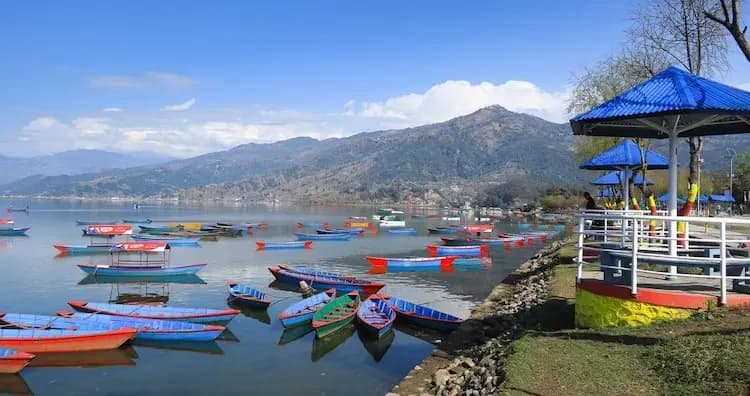
TL;DR: Nepal received 1,158,459 foreign visitors in 2025. Arrivals peaked in October (128,443), stayed high in November and April, and fell to a low in July (70,193). India is the largest single source, with 292,438 arrivals (25.2 percent), but its share swings from about 16 to 20 percent in September and November to about 39 to 43 percent in June to August. Pokhara adds a large domestic market: Republica quotes the Gandaki tourism head saying domestic visitors are at least 40 percent of arrivals and that adventure destinations there depend heavily on them. Rain, storms and holidays move demand sharply from year to year. Plan content before the peak months, keep prices and hours current, and measure your own mix, because the national picture is only a guide.
Notice: Paragliding is safety-critical and weather-dependent. Operating hours, sites and conditions are set by CAAN, NAA and the weather, not by marketing. The visitor figures below are national, from the Nepal Tourism Board, not Pokhara-specific, and no official body keeps reliable Pokhara visitor statistics. Use this guide to form questions to test against your own booking records, not as a forecast.
Question | Short answer |
|---|---|
Busiest months nationally in 2025? | October (128,443), November (116,553), April (116,490) |
Quietest months? | July (70,193) and June (76,425) |
Largest source market? | India, 292,438 arrivals in 2025 (25.2 percent), then the USA (112,316) and China (95,480) |
When is India's share highest? | June to August, roughly 39 to 43 percent of monthly arrivals |
Domestic demand in Pokhara? | At least 40 percent of arrivals, per Republica quoting the Gandaki tourism head |
Biggest planning risk? | Weather and holiday swings, for example Dashain 2025 occupancy of 30 percent after rain versus 80 percent the year before |
What to do first? | Record the nationality, language and booking channel of every guest |
The data problem: national figures, local reality
The Nepal Tourism Board (NTB) publishes monthly international visitor arrivals by nationality. Those are national totals. They include trekkers heading to Annapurna and Mustang, pilgrims, Indian visitors travelling overland and business visitors, many of whom never fly in Pokhara. They exclude Nepali travellers.
For Pokhara itself the evidence is thinner:
Item | What is reported | Source | Confidence |
|---|---|---|---|
Official visitor statistics for Pokhara | No official body keeps accurate figures | Ratopati report, year not visible | Low to medium |
Foreign visitors a year | Local entrepreneurs estimate about 400,000 | A reference summary citing local entrepreneurs | Low, estimate |
Domestic share of hotel occupancy | Roughly 30 percent, an entrepreneur estimate | Same reference summary | Low |
Domestic share of arrivals | At least 40 percent, up from at most 5 percent about 25 years ago | Republica, 1 April, year not visible | Medium |
Length of stay | Hotel managers said visitors spent about two days in Pokhara in 2018 | Online Khabar | Low, dated |
Airport | Pokhara International Airport opened in 2023 | The Rising Nepal, 19 March 2026 | Medium |
Treat all of these as indications. If you want a real picture, your own booking records are the only dataset that is specific to paragliding.
National seasonality in 2025
The table uses NTB figures, as reported by The Himalayan Times, Republica and trade outlets, for international visitor arrivals in 2025. January to March is shown combined because we found the combined total, not each month. The January to March figure is derived as the January to May total of 501,264 minus the April and May figures. All months add up exactly to the reported annual total of 1,158,459.
Month 2025 | Arrivals | Share of the year | India arrivals | India share of the month |
|---|---|---|---|---|
January to March (combined) | 298,558 (average about 99,519 a month) | 25.8 percent | Not found | Not found |
April | 116,490 | 10.1 percent | Not found | Not found |
May | 86,216 | 7.4 percent | 28,160 | 32.7 percent |
June | 76,425 | 6.6 percent | 32,662 | 42.7 percent |
July | 70,193 | 6.1 percent | 27,152 | 38.7 percent |
August | 88,680 | 7.7 percent | 35,505 | 40.0 percent |
September | 78,711 | 6.8 percent | 15,556 | 19.8 percent |
October | 128,443 | 11.1 percent | Not found | Not found |
November | 116,553 | 10.1 percent | 18,995 | 16.3 percent |
December | 98,190 | 8.5 percent | 30,093 | 30.6 percent |
Year | 1,158,459 | 100 percent | 292,438 | 25.2 percent |
Other 2025 source markets: the United States 112,316 (9.7 percent of arrivals) and China 95,480 (8.2 percent).
What the table shows. Autumn and spring are the two peaks for foreign visitors: October and November, and the spring months. July is the low point, about 55 percent of October's level. India behaves differently. Its share is highest in the months when total arrivals are lowest, and lowest in the autumn peak when Western trekkers arrive. So the nationality mix of visitors in Nepal changes through the year even when the total does not.
What it does not show. It does not tell you how many of those visitors reach Pokhara, how many fly, or when they decide. Indian visitors headed to Muktinath, for example, were described by a hotel association head as not staying in Pokhara, going directly to their destinations. Nepal's own domestic travellers are not counted at all.
The flying seasons
Visitors and flying conditions do not match perfectly. Three sources describe the pressure points, none of them a statistical weather record:
- The Rising Nepal reports that storms are common in Pokhara in March and April.
- Operator guides commonly describe June to August, the monsoon, as a poor time to fly. These are vendor pages, not official guidance.
- CAAN set operating hours in Pokhara, reported as not before 10 am and not after 3:30 pm, later extended by an hour and a half, so flying is a daytime, morning-to-afternoon activity and hours have changed.
Two consequences follow. In the months when Indian visitors are the largest share of arrivals nationally, operator guides describe the flying as hardest. We cannot tell from public data whether Indian visitors still fly in those months, so check your own records. And in the spring months when foreign visitor numbers are high, storms are a recognised risk, so your cancellation and rebooking policy matters.
Pokhara's domestic and holiday demand
The most reliable local signals come from hotel and tourism officials quoted in the press.
Period | What was reported | Source |
|---|---|---|
Early Dashain 2025 | Occupancy fell to 30 percent after heavy rain, against up to 80 percent the previous year | Republica, 8 October 2025 |
Dashain and Tihar 2025 | About 90 percent of Lakeside hotels occupied during the long holiday, with domestic visitors plus foreign trekkers passing through | The Himalayan Times and Sharesansar, 26 October 2025 |
Tihar 2025 | A Kathmandu Post report said the rush was short-lived and that foreign arrivals stayed low | Kathmandu Post, 27 October 2025 |
English New Year, 1 January | Hotel occupancy around 90 percent, with domestic and Indian visitors in large numbers | Republica, 1 January |
Nepali New Year | The hotel association organised the 20th Fewa New Year Festival, expecting occupancy above 90 percent during the festival | New Business Age, 2025 |
Off-peak | The Gandaki tourism head said domestic visitors keep around half of tourism business active | Republica, 1 April, year not visible |
What this tells an operator. Domestic and Indian visitors can fill Pokhara in short bursts tied to holidays and school breaks. Those bursts can disappear with a week of rain. Planning only for the overseas calendar misses a large part of demand, and planning only for holidays exposes you to weather swings.
Who the customers are: segments to test
These segments are hypotheses built from the data above and from competitor guides. Each should be tested against your own bookings.
Segment | How they probably decide | Language and channel | Payment | What your site and profile need |
|---|---|---|---|---|
Overseas planners (for example from the USA, Europe, Australia) | Research before arriving, compare reviews and safety information | English, Google, TripAdvisor, AI assistants, travel blogs | Cards or transfer, which is hard for Nepali merchants (see booking guide) | Licence and safety page, clear policies, recent reviews |
Overseas visitors already in Pokhara | Decide in a day or two, often at Lakeside | English, Google Maps, hotel desks, WhatsApp | Cash or transfer on arrival | Accurate pin, tap-to-call, fast replies |
Indian visitors | Often travel in groups or families, many on holiday peaks | Hindi and English, Google, Facebook, Instagram, YouTube | Khalti QR is reported to accept cross-border payments from Indian visitors, per a 2024 report | Group pricing, Hindi support, clear total price |
Domestic Nepali visitors | Holiday and weekend driven, word of mouth, social media | Nepali, Facebook, Instagram, TikTok, WhatsApp | Wallets and bank apps | Nepali language content, wallet payment, group deals |
Chinese visitors | A smaller share of national arrivals at 8.2 percent | Mandarin, platforms outside our research | Not researched | We could not verify demand for Pokhara paragliding, so check before investing |
Hotel and agent referrals | Recommendation from staff | Phone, WhatsApp, partner pages | Commission arrangements | Partner page, reliable pick-up, quick confirmation |
Which segment to prioritise: a scored comparison
The scores are AlpineRoot's judgment, built from the national data above, not measured Pokhara demand. Weights reflect what matters to a small operator. Maximum possible score is 80.
Segment | Volume (w4) | Predictability (w3) | Reachable online (w3) | Easy payment for the operator (w3) | Fit with flying months (w3) | Weighted total | Percent of max |
|---|---|---|---|---|---|---|---|
Overseas planners (for example from the USA and Europe) | 3 | 4 | 5 | 2 | 4 | 57 | 71% |
Indian visitors | 5 | 3 | 3 | 4 | 2 | 56 | 70% |
Domestic Nepali visitors | 4 | 2 | 3 | 5 | 3 | 55 | 69% |
Chinese visitors | 2 | 3 | 1 | 1 | 3 | 32 | 40% |
What the numbers mean. Three segments score within two points of each other. No single group dominates, so a mixed approach is sensible. Chinese visitors score low mainly because we have no evidence of demand for Pokhara paragliding and cannot reach or pay them easily, not because they do not matter.
Where it could mislead. The scores rest on national shares and general judgments. If your records show most guests are domestic groups, or that nearly all come through hotel desks, the ranking changes. Re-weight with your own data.
Planning around the calendar
Search and profile work take time. The Nepal price guides cited in our SEO pricing guide describe three to six months before significant results, which is a rule of thumb that depends on competition. The table turns that rule into start-by windows.
Target peak | Start SEO and page work between | Reasoning |
|---|---|---|
October and November, the autumn peak | April and July | 3 to 6 months before October |
April, the spring peak | October and January | 3 to 6 months before April |
Dashain and Tihar, usually October | April and July | Same as autumn |
English New Year, 1 January | June and September | 3 to 6 months before |
June to August, high Indian share | December and March | 3 to 6 months before June |
Quick profile fixes, photos and listings can show effects sooner, so do them in the weeks before each peak.
Period | Operations and content | Profile, reviews and site |
|---|---|---|
Spring (March to May) | Plan for storms, make weather and rebooking rules prominent | Refresh hours, sites and prices, collect reviews, update photos |
Monsoon (June to August) | Review what works, record bookings by nationality, fix pages | Test the site, reply to reviews, prepare autumn content |
Early autumn (September) | Confirm tariffs, hours, launch and landing sites | Re-confirm the safety page, check listings |
Autumn peak (October and November) | Fast replies, daily availability notes, short flight videos with consent | Review requests, daily profile accuracy |
Winter (December to February) | Prepare for holiday demand, assess the year | Update seasonal pages, collect bookings data |
Holiday peaks (Dashain, Tihar, New Year, Nepali New Year) | Group handling, Nepali language replies, clear total prices | Group pricing page, wallet payment options |
How to measure your own mix
The national tables are a starting point. A small spreadsheet kept for a full season is more useful.
Field to record | Why |
|---|---|
Booking date and flight date | Shows lead time and cancellations |
Guest nationality or home city | Real mix, month by month |
Language of communication | Which languages to support |
Group size and weight band | Capacity planning |
Booking channel | Hotel, marketplace, WhatsApp, walk-in, website |
How they found you | Search, map, review, friend, hotel |
Payment method | Which options guests use |
Outcome | Flown, cancelled for weather, no-show |
Review left | Reputation tracking |
After one season you can calculate shares by nationality and channel, cancellations by month and lead time by segment. Compare these with the NTB figures and the segments above, then adjust. Keep guest data private and use it only for planning.
Costs
Seasonality affects when money is best spent more than how much. AlpineRoot's published SEO packages, checked 8 November 2026, are NPR 19,999 (Starter), 34,999 (Professional) and 59,999 (Enterprise) a month, and the pricing page does not state whether VAT or a minimum term applies, so ask. Reports say SEO takes months to show results, so a spend that starts after the peak has begun will mostly help the next season. See the SEO cost guide for 1, 3 and 5 year totals and break-even maths.
Cost item | One-time or recurring | Fixed or variable | What drives it | Low / typical / high (NPR) | Source or basis | Verified on |
|---|---|---|---|---|---|---|
SEO Starter, Professional, Enterprise | Monthly | Fixed (published) | Scope | 19,999 / 34,999 / 59,999 | 8 Nov 2026 | |
Seasonal content updates done by staff | Recurring | Variable, time-based | How often details change | Not stated | Operator's own cost | 8 Nov 2026 |
Photography and video | One-time, then periodic | Variable | Shoot days, consent | Not stated | Not in AlpineRoot's published packages | 8 Nov 2026 |
Paid ads for peak weeks | Recurring | Variable | Season, competition | Not stated | No verified Pokhara figure found | 8 Nov 2026 |
Mistakes to avoid
Mistake | Why it hurts | Fix |
|---|---|---|
Planning only for overseas visitors | Misses domestic and Indian demand | Record and check your mix |
Starting SEO after the peak begins | Results arrive too late | Start months earlier |
Letting prices and hours go stale in the season | Trust drops and disputes rise | Update at the start of each peak |
Ignoring weather in the plan | Cancellations hurt reviews | Publish clear rebooking rules |
Relying on national shares for local decisions | The data does not fit | Use your own bookings |
Not supporting Nepali and Hindi | Misses large groups | Add reviewed translations where demand exists |
One message for every segment | Weak response | Tailor key pages and replies |
Assuming holiday bursts repeat | Rain and disruptions cut them | Keep flexible budgets |
Decision framework
- If you have no booking data, start recording nationality, channel and outcome today.
- If most guests are overseas planners, invest in safety content, reviews and English clarity first.
- If most guests are Indian groups, add Hindi support, group pricing and cross-border payment checks.
- If domestic holidays drive your calendar, prepare Nepali content and wallet payment before each festival.
- If you want to be visible in autumn, start page and profile work in spring.
- If you cannot fly many days in monsoon, use those months to improve content and collect data.
- If weather swings hurt cash flow, consider smaller monthly commitments and clear deposit rules.
How AlpineRoot approaches it
We build websites and run local SEO for businesses in Nepal, and we plan content around seasons when a client can share booking data. We have not worked with a paragliding operator, so this guide relies on public statistics and reports. Our Pokhara page and local SEO in Pokhara guide describe how we work in the city. To discuss a seasonal plan, contact us.
Frequently asked questions
When is the best time to fly in Pokhara?
Operators and guides disagree, and conditions change by the day. Reports describe storms in March and April and the monsoon as a poor period. Ask your own operator and pilots for current guidance rather than relying on a general rule.
Do Indian tourists fly in Pokhara?
Many Indian visitors travel to Nepal, 292,438 in 2025 according to NTB, but we have no data on how many fly in Pokhara. Check your own bookings and nationalities, especially in June to August when India's share is high.
How many tourists visit Pokhara each year?
There is no reliable official figure. Local entrepreneurs estimate about 400,000 foreign visitors, and domestic visitors are reported at 30 to 40 percent or more of the market. Treat both as estimates.
Are domestic tourists a big part of the market?
Yes. Republica quotes the Gandaki tourism head saying domestic visitors are at least 40 percent of arrivals and that adventure tourism depends heavily on them. Domestic demand is bursty and holiday driven.
Which months are quietest nationally?
In 2025, July (70,193) and June (76,425) were the lowest months for foreign visitor arrivals. Local conditions differ, and domestic visitors are not counted.
What do overseas planners want to see?
Licence and safety information, clear inclusions and policies, and recent reviews. See our guide on licence and safety information and reviews.
Should I add Hindi or Nepali pages?
If your records show Indian or domestic guests in numbers, yes, with reviewed text. Poor translation damages trust. Start with the booking and price pages.
How do I handle a rainy holiday week?
Have clear rescheduling rules, tell guests early, keep your profile accurate and avoid overpromising. The Dashain 2025 rains show how quickly occupancy can fall.
Can I use national arrivals to forecast my bookings?
Only roughly. They show the overseas calendar but exclude domestic travellers and do not say who reaches Pokhara or flies. Build your own forecast from your records.
When should I start marketing for the autumn peak?
For search work, reports suggest three to six months, so April to July for October. Profile, photo and site fixes can be done a few weeks before.
Does the airport change the seasons?
Pokhara International Airport opened in 2023, according to The Rising Nepal, and it moved flight corridors and sites, but we found no data showing it shifted the seasons. Keep your sites and hours page current.
What data should I keep private?
Guest names, phone numbers and weights. Use aggregates for planning, restrict access and delete what you no longer need.
Next steps
Start recording your mix this week, set start-by dates for the next peak and plan one update of your safety, price and hours pages before it. For help planning a seasonal calendar, contact AlpineRoot.
Related reading
- Website development for paragliding companies in Pokhara
- Cost of paragliding website development and upkeep
- Local SEO for hotels and resorts in Nepal
- Local SEO for trekking companies in Nepal
- What is technical SEO?
- Why SEO is important for business
- Travel and tourism industry page
Sources and methodology
- Nepal Tourism Board press release on August 2025 arrivals and Tourism Insight reports for April, May and July 2025, with The Himalayan Times, Republica, Sharesansar and other outlets for the monthly and annual figures, including the January to May total of 501,264 and the annual total of 1,158,459
- The Himalayan Times and Nepyork reports on 2025 country-wise arrivals (India 292,438, the United States 112,316, China 95,480)
- Republica (8 October 2025, 1 January, 1 April), The Himalayan Times and Sharesansar (26 October 2025), Kathmandu Post (27 October 2025), New Business Age, Singha Darbar, Ratopati and Online Khabar on Pokhara hotel occupancy, domestic demand and visitor statistics
- A reference summary of Pokhara tourism citing local entrepreneurs (about 400,000 foreign visitors a year)
- The Rising Nepal, 19 March 2026, on storms and the airport; Republica on operating hours; Sharesansar, 28 February 2024, on Khalti QR for Indian tourists
- AlpineRoot pricing page and SEO pricing guide
- Arithmetic checked with code: the monthly figures sum to the annual total exactly
Evidence quality: the national figures come from NTB through news reports (secondary), and they reconcile exactly. Pokhara-specific figures are estimates from officials and entrepreneurs, with several undated excerpts. The January to March split is derived, not reported. The segment scores are AlpineRoot's judgment, and we found no data on paragliding guests by nationality, so that remains the biggest gap.
Ready to build something great?
We partner with ambitious businesses to create websites that convert. Let's talk about your project.
Related Articles

Digital Marketing Cost for Trekking and Tour Companies in Nepal (2026)

Why SEO Beats Paid Ads in the Long Run for Trekking and Tour Companies in Nepal